The curtain rose on the 2026 Formula 1 era this week as the sport’s radically revised machinery finally stretched its legs during a private Barcelona test. With the first meaningful data points now in hand, paddock insiders have begun sketching an early hierarchy, offering tentative clues about which teams may define the championship narrative.
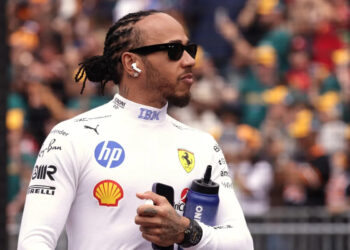
While lap times at this embryonic stage are notoriously deceptive, Ferrari still commanded attention. Lewis Hamilton topped the timesheets with a brisk 1:16.3, immediately igniting intrigue around the Scuderia’s new package. Close behind, George Russell demonstrated Mercedes’ underlying potency, while reigning champion Lando Norris placed McLaren firmly within striking distance.
Pre-test whispers had cast Mercedes as the presumptive benchmark, yet that narrative has been publicly downplayed from within Brackley. Sky Sports F1’s Craig Slater revealed that Mercedes executives are keen to resist the favourites label, insisting the competitive landscape remains tightly compressed among what they view as a “big four” comprising Mercedes, Ferrari, Red Bull, and McLaren.
That humility, however, is not universally echoed across the paddock. According to Slater, rival teams—particularly McLaren—quietly suspect Mercedes may have emerged from the box with a marginal but tangible edge. While not assumed to be season-defining, the Barcelona running has convinced some observers that Mercedes’ advantage is rooted in substance rather than circumstance.
Crucially, rivals believe this progress extends beyond favourable conditions or superficial gains. Enhanced mastery of the new power unit regulations, particularly the harvesting and deployment of electrical energy, appears to be a decisive factor. The prevailing sentiment leaving Barcelona is that Mercedes have produced a fundamentally strong car—one that may have nudged them half a step ahead as the 2026 title battle begins to take shape.