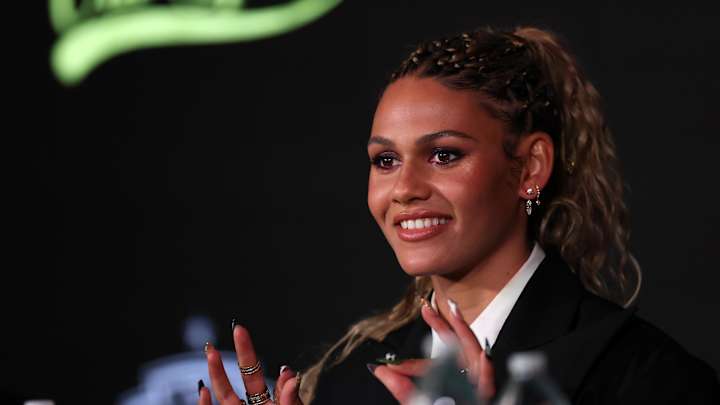
Trinity Rodman has sent shockwaves through women’s sports after agreeing to a historic contract with the Washington Spirit in the National Women’s Soccer League. Reports indicate the deal exceeds $2 million annually when bonuses are included, officially making her the highest-paid player the league has ever seen. The agreement highlights how rapidly compensation is evolving in women’s athletics, particularly outside of basketball, and has reignited conversations about pay equity across professional leagues.
This milestone arrives at a pivotal moment for the WNBA, as players and league officials continue negotiations on a new collective bargaining agreement. These talks are expected to reshape the league’s salary structure entirely, which makes direct comparisons between Rodman’s earnings and current WNBA pay both compelling and complicated. Still, examining today’s numbers offers a clear snapshot of how wide the gap remains.
At present, Rodman’s contract stands far above what any WNBA player earns. Salary data shows that in 2025, Jackie Young of the Las Vegas Aces led the league in annual pay at just over $252,000—only a fraction of Rodman’s reported income. The disparity becomes even more pronounced when looking at non-max or rookie contracts. For example, Indiana Fever standout Caitlin Clark, one of the most recognizable figures in women’s sports, earns under $85,000 per year at this stage of her career.
That gap, however, may not last much longer. Proposals discussed in the ongoing CBA negotiations suggest a dramatic financial shift for the WNBA. Reports indicate that future maximum salaries could surpass $1.3 million annually, with average player earnings climbing beyond $530,000 once revenue sharing is included. Over the full length of the proposed agreement, those figures could rise even further, potentially pushing top contracts toward the $2 million mark.
If finalized, these changes would place elite WNBA salaries much closer to Rodman’s record-setting deal, while also lifting minimum and average pay well beyond current standards in women’s soccer. Although revenue sharing remains a key sticking point in negotiations, the league’s recent growth suggests higher salaries are inevitable. Once a new agreement is reached, WNBA pay is likely to evolve from a point of comparison into a benchmark of its own, paving the way for future record-breaking contracts across women’s sports.
About the Author