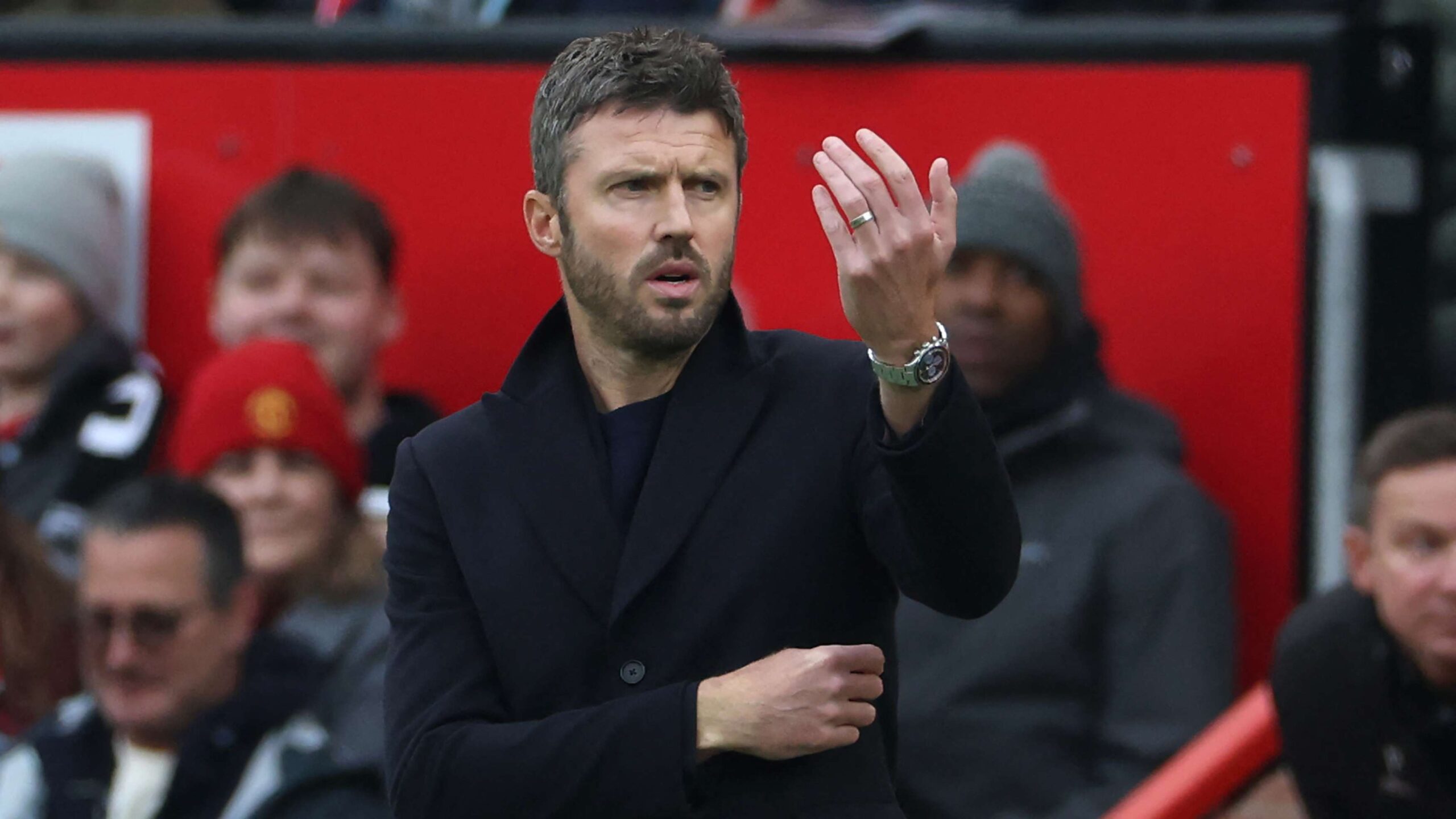

Former Premier League midfielder Jamie O’Hara has sparked debate after strongly criticizing the decisions of Michael Carrick, claiming the coach’s recent tactics are making things more difficult for his team.
Speaking during a recent football discussion, O’Hara argued that Carrick’s team selections are harming the squad’s attacking balance, particularly pointing to the decision to leave Amad Diallo on the bench.
According to O’Hara, Amad has been one of the most energetic and creative attacking players available, and removing him from the starting lineup weakens the team’s ability to break down defenses.
“Amad should not be sitting on the bench,” O’Hara said. “He’s a player who brings pace, creativity, and unpredictability. When he’s on the pitch, defenders struggle to deal with him. Taking him out of the team only makes things worse.”
Instead, the pundit suggested that Brazilian forward Matheus Cunha should be the one dropped from the starting lineup. O’Hara believes Cunha has not been as effective in recent matches and that the team’s attack lacks sharpness when he leads the line.
“Cunha hasn’t been delivering the impact you expect at this level,” O’Hara continued. “If someone has to make way, it should be him, not Amad.”
The comments have already sparked discussion among fans and analysts, with many debating whether Carrick’s tactical decisions are helping or hurting the squad’s performances. Some supporters agree with O’Hara’s assessment, arguing that Amad’s flair and attacking drive make him one of the most exciting players in the team.
Others, however, believe Carrick may have tactical reasons for rotating his attackers, particularly in a demanding schedule where player fitness and match strategy often influence selection.
As pressure builds and performances come under increasing scrutiny, Carrick’s team selections will likely continue to be closely watched. Whether the manager chooses to adjust his lineup or stick with his current strategy could play a key role in determining the club’s fortunes in the coming weeks. ⚽🔥