9INENEWS
  • AMERICAN FOOTBALL
  • BASEBALL
  • BASKETBALL
  • COLLEGE SPORTS
  • FOOTBALL
  • ICE-HOCKEY
  • RUGBY
Subscribe
9INENEWS
  • AMERICAN FOOTBALL
  • BASEBALL
  • BASKETBALL
  • COLLEGE SPORTS
  • FOOTBALL
  • ICE-HOCKEY
  • RUGBY
No Result
View All Result
9INENEWS
No Result
View All Result
  • AMERICAN FOOTBALL
  • BASEBALL
  • BASKETBALL
  • COLLEGE SPORTS
  • FOOTBALL
  • ICE-HOCKEY
  • RUGBY
Home Uncategorized

Adam Kinzinger Speaks on US Politics and the Future of Democracy

by Chagba Godwin
April 13, 2026
in Uncategorized
0

Members of the Tufts community gathered in large numbers for an engaging evening as former U.S. Congressman shared reflections on his political journey and the defining moments that shaped his career. Speaking candidly, he revisited his decision to stand against efforts to overturn the 2020 election, emphasizing that democracy cannot function when trust in the system is deeply divided. For him, the issue was clear-cut, rooted in a belief that the integrity of democratic institutions must be upheld at all costs.
Kinzinger, who represented Illinois in Congress for over a decade, became widely known for his criticism of , particularly in the aftermath of the January 6 Capitol attack. His willingness to break ranks with his party by supporting investigations and impeachment efforts came with significant political consequences, including backlash from fellow Republicans and his eventual decision not to seek reelection. Since leaving office, he has transitioned into media and public commentary, continuing to engage in national conversations about governance and accountability.
During his talk, Kinzinger explored the growing polarization within American politics, attributing it in part to what he described as “tribalism.” He argued that many individuals prioritize loyalty to political groups over constitutional principles, driven by a fear of exclusion. This trend, he noted, has been amplified by a fast-paced media environment that often thrives on outrage, reinforcing divisions and shaping public perception in ways that make compromise increasingly difficult.
He also addressed the role of higher education and the importance of exposing students to diverse viewpoints. While acknowledging that universities should encourage open debate, Kinzinger criticized efforts by government officials to pressure academic institutions through funding cuts and policy restrictions. In his view, such actions undermine intellectual growth and limit opportunities for critical thinking, especially in areas related to national security and strategic decision-making.
Despite the challenges facing the United States, Kinzinger struck an optimistic tone about the country’s future. Reflecting on the nation’s history, he pointed out that each generation has faced moments of uncertainty and division, yet has ultimately contributed to strengthening the democratic system. He expressed confidence that the current generation will rise to meet its own challenges, guided by resilience and a commitment to preserving the nation’s foundational ideals.

Previous Post

Trump Criticizes Pope Leo Amid Rising Tensions Over War and Politics

Next Post

How Trump Policies Are Reshaping US China Economic Relations

Related Posts

Trump Criticizes Pope Leo Amid Rising Tensions Over War and Politics
Uncategorized

Trump Criticizes Pope Leo Amid Rising Tensions Over War and Politics

April 13, 2026
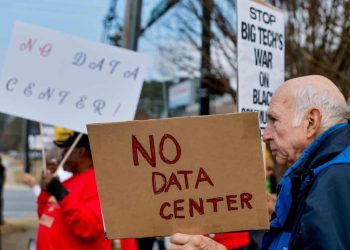
Growing Opposition to AI Data Centres Signals Trouble for Big Tech A surprising alliance is beginning to take shape across the United States, as groups with sharply different political views unite over a common concern. From conservative voters in traditionally Republican regions to progressive activists and educators in liberal states, resistance is mounting against the rapid expansion of artificial intelligence data centres. What once seemed like a purely technological or economic issue is now evolving into a broader public debate about corporate influence and community impact. This wave of opposition has caught policymakers off guard, particularly at the federal level where accelerating AI infrastructure has been treated as a national priority. Early policy decisions encouraged fast-tracked development with minimal regulatory hurdles, largely to maintain a competitive edge in the global AI race. Backed by major technology corporations investing hundreds of billions of dollars, the push for rapid construction has been intense. However, the speed and scale of these projects have raised concerns that long-term consequences are being overlooked. At the state level, governments that initially welcomed these investments are beginning to face backlash from residents. While data centres promise economic growth, they also bring significant strain on local resources. Increased electricity consumption can drive up utility costs, while heavy water usage and pressure on infrastructure create additional challenges for surrounding communities. As these impacts become more visible, frustration is growing among citizens who feel their needs are being sidelined in favor of corporate interests. Political leaders are now starting to reassess their positions. Some who once competed to attract tech investment are calling for stronger oversight and more balanced approaches. The issue is gaining traction across party lines, with debates focusing not only on economic benefits but also on environmental sustainability and social equity. As more projects face delays or cancellations due to local resistance, it is clear that unchecked expansion is no longer politically viable. Underlying this shift is a broader unease about the role of artificial intelligence in society. While experts remain optimistic about its long-term benefits, public opinion is far more cautious. Concerns about job displacement, environmental costs, and widening inequality are fueling skepticism. The growing resistance to data centre development reflects a deeper demand for accountability, signaling that communities are no longer willing to accept technological progress without meaningful safeguards.
Uncategorized

Growing Opposition to AI Data Centres Signals Trouble for Big Tech A surprising alliance is beginning to take shape across the United States, as groups with sharply different political views unite over a common concern. From conservative voters in traditionally Republican regions to progressive activists and educators in liberal states, resistance is mounting against the rapid expansion of artificial intelligence data centres. What once seemed like a purely technological or economic issue is now evolving into a broader public debate about corporate influence and community impact. This wave of opposition has caught policymakers off guard, particularly at the federal level where accelerating AI infrastructure has been treated as a national priority. Early policy decisions encouraged fast-tracked development with minimal regulatory hurdles, largely to maintain a competitive edge in the global AI race. Backed by major technology corporations investing hundreds of billions of dollars, the push for rapid construction has been intense. However, the speed and scale of these projects have raised concerns that long-term consequences are being overlooked. At the state level, governments that initially welcomed these investments are beginning to face backlash from residents. While data centres promise economic growth, they also bring significant strain on local resources. Increased electricity consumption can drive up utility costs, while heavy water usage and pressure on infrastructure create additional challenges for surrounding communities. As these impacts become more visible, frustration is growing among citizens who feel their needs are being sidelined in favor of corporate interests. Political leaders are now starting to reassess their positions. Some who once competed to attract tech investment are calling for stronger oversight and more balanced approaches. The issue is gaining traction across party lines, with debates focusing not only on economic benefits but also on environmental sustainability and social equity. As more projects face delays or cancellations due to local resistance, it is clear that unchecked expansion is no longer politically viable. Underlying this shift is a broader unease about the role of artificial intelligence in society. While experts remain optimistic about its long-term benefits, public opinion is far more cautious. Concerns about job displacement, environmental costs, and widening inequality are fueling skepticism. The growing resistance to data centre development reflects a deeper demand for accountability, signaling that communities are no longer willing to accept technological progress without meaningful safeguards.

April 13, 2026
Comparing the Most Iconic Driver Engineer Partnerships in Formula 1
Uncategorized

Comparing the Most Iconic Driver Engineer Partnerships in Formula 1

April 12, 2026
US Moves to Secure Oil Flow Through Strait of Hormuz
Uncategorized

US Moves to Secure Oil Flow Through Strait of Hormuz

April 12, 2026
How US Politics Is Shaping Global Travel Decisions in 2026
Uncategorized

How US Politics Is Shaping Global Travel Decisions in 2026

April 12, 2026
Why Keanu Reeves Shines in the Comedy Film Outcome
Uncategorized

Why Keanu Reeves Shines in the Comedy Film Outcome

April 12, 2026

Leave a Reply Cancel reply

Your email address will not be published. Required fields are marked *

Recent Posts

  • Wayne Rooney Says Manchester City Hold Psychological Edge Over Arsenal in Premier League Title Race
  • Italy Could Still Qualify for 2026 World Cup Amid Iran Uncertainty
  • How Trump Policies Are Reshaping US China Economic Relations
  • Adam Kinzinger Speaks on US Politics and the Future of Democracy
  • Trump Criticizes Pope Leo Amid Rising Tensions Over War and Politics
Plugin Install : Widget Tab Post needs JNews - View Counter to be installed
  • Trending
  • Comments
  • Latest

BYU to Face Ohio State in 2026 College Basketball Season Opener The upcoming 2026–27 college

April 10, 2026

NCAA Final Four Betting Odds Tighten as Tournament Trends and Masters Highlights Take Center Stage Betting buzz: Men’s Final Four features tightest spreads on record

April 9, 2026

Best Fantasy Basketball Picks and NBA Betting Tips for Thursday Night Games Fantasy basketball picks, DFS and betting tips for Thursday’s NBA games

April 9, 2026

Vd3n41F

April 6, 2026

Recent News

BYU to Face Ohio State in 2026 College Basketball Season Opener The upcoming 2026–27 college

April 10, 2026

NCAA Final Four Betting Odds Tighten as Tournament Trends and Masters Highlights Take Center Stage Betting buzz: Men’s Final Four features tightest spreads on record

April 9, 2026

Categories

  • AMERICAN FOOTBALL
  • Arizona State devils
  • Aussie
  • BASEBALL
  • BASKETBALL
  • Birmingham City
  • Boxing
  • COLLEGE SPORTS
  • Dallas cowboys
  • Detroit Lions
  • Detroit tigers
  • FOOTBALL
  • Golf
  • Handball
  • ICE-HOCKEY
  • Liam Payne
  • Los Angeles Lakers
  • Marc Marquez
  • Motorcross
  • Music
  • NASCAR
  • New York Mets
  • NFL
  • Notre Dame'
  • Ohio State University
  • PENRITH PANTHERS
  • R&B
  • RUGBY
  • SEC
  • Space launch
  • Tennis
  • Uncategorized
  • VOLLEYBALL

We strive to turn our passion for NEWS, SPORTS, CELEBRITY & LIFESTYLE into a thriving website. 

I will keep on posting such valuable and knowledgeable information on my Website for all of you. Your love and support matters a lot.

9inenews | Copyright © Reserve 2023-2024

No Result
View All Result
  • AMERICAN FOOTBALL
  • BASEBALL
  • BASKETBALL
  • COLLEGE SPORTS
  • FOOTBALL
  • ICE-HOCKEY
  • RUGBY

9inenews | Copyright © Reserve 2023-2024