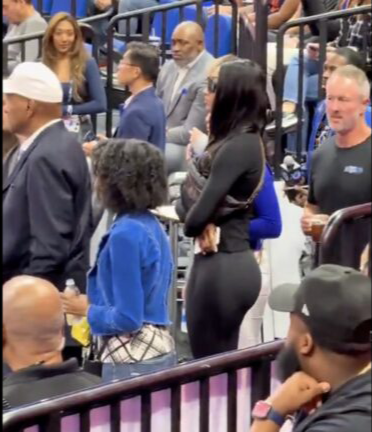
Angel Reese’s recent courtside appearance at an Orlando Magic game has sparked a wave of mixed reactions across social media. What was expected to be a simple night of support for Wendell Carter Jr quickly turned into a viral discussion point as fans began analyzing her behavior throughout the matchup. Her presence has never gone unnoticed, but this time, her expressive reactions became the center of attention, fueling online debates about whether she was simply enjoying herself or unintentionally stealing the spotlight.
Throughout the broadcast, cameras frequently caught Reese cheering enthusiastically, reacting to tense moments, and visibly engaging with the energy of the game. While many viewers saw her behavior as natural excitement—something anyone rooting for a loved one would display—others argued that her reactions were “too distracting.” Some fans felt she drew attention away from the live action, noting that the broadcasters seemed to show her often enough to influence the narrative of the night.
As the clips circulated on TikTok, X, and Instagram, the conversation gained momentum. Supporters of Angel Reese defended her instantly, praising her authenticity and passion. They pointed out that her vibrant personality has always been part of her charm, both on and off the court. To these fans, Reese brought liveliness to the arena and added an extra layer of excitement to an ordinary game. They argued that there was nothing unusual about someone cheering loudly or reacting emotionally, especially when a partner is playing.
However, a different group of viewers viewed the situation through a critical lens. They claimed that Reese’s reactions bordered on excessive and pulled focus from the game itself. Some even suggested she overshadowed moments on the court, making her a “main character” in a game she wasn’t playing in. These opinions circulated widely, turning a night of support into a debate-filled spectacle.
This disagreement sparked a broader discussion about how public figures—especially women—are perceived when they occupy visible spaces in sports settings. Many commenters pointed out that male athletes often have friends or partners cheering courtside without attracting the same level of criticism. This raised questions about double standards and the extra scrutiny placed on women who display confidence, enthusiasm, or bold personality traits in public spaces. Reese, already a highly recognizable figure in basketball, became another example of how quickly reactions can escalate simply because of her fame.
Even with the backlash, Angel Reese received overwhelming support from fans who admire her unapologetic nature. They praised her for showing up authentically, cheering openly, and supporting Wendell Carter Jr without toning down her personality. These supporters believe that her courtside reactions were harmless and should not have sparked such intense debate.
In the end, Angel Reese’s courtside appearance became far more talked about than the game itself. The incident highlights how easily social media can magnify ordinary moments and turn them into viral conversations. Whether fans viewed her actions as energetic or distracting, one thing remains true: Angel Reese continues to command attention wherever she goes—and the public always has something to say about it.