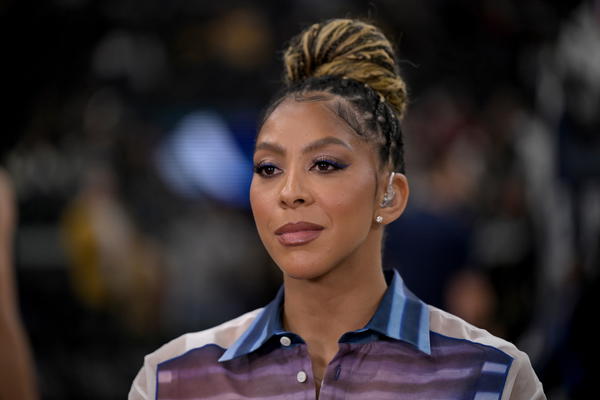
Jan 22, 2026; Inglewood, California, USA; Member of the Amazon Prime NBA broadcast team Candace Parker at Intuit Dome for the game between the Los Angeles Clippers and the Los Angeles Lakers. Mandatory Credit: Jayne Kamin-Oncea-Imagn Images
The landscape of professional women’s basketball is currently suspended in a high-stakes waiting game that could define the sport’s trajectory for the next decade. As the WNBA approaches its landmark 30th anniversary season, a significant shadow looms over the festivities: the absence of a new Collective Bargaining Agreement (CBA). With the 2026 regular season slated to tip off on May 8, the lack of a finalized labor deal has created a ripple effect of uncertainty across the league. This standoff is not merely a logistical hurdle but a defining moment that threatens to stall the immense cultural and commercial momentum the league has built over the last few years.
Among the most vocal advocates for a swift and fair resolution is legendary Hall of Famer Candace Parker. In recent commentary, Parker has highlighted that the WNBA’s influence extends far beyond North American borders, serving as a primary blueprint for women’s professional sports globally. She argues that because the league has consistently led the way in player advocacy and visibility, it now bears a profound responsibility to set a high standard for labor relations. Parker’s perspective suggests that the current negotiations are a test of leadership for both the league and the players’ union, requiring a delicate balance between pushing for necessary radical change and preserving the continuity of the game itself.
The logistical strain of this deadlock is becoming increasingly difficult to ignore as the calendar turns toward February. Standard league operations, such as free agency—originally scheduled to begin in mid-January—remain frozen under a mandatory moratorium. This delay places front offices in a precarious position, as they may soon be forced to construct entire rosters under extreme time pressure once a deal is reached. Compounding this tension is the fact that the league has already released its full 44-game schedule, a move that some interpret as a “business as usual” facade while the underlying foundation remains unsettled. Without a CBA, even major milestones like the WNBA Draft and the debut of expansion teams are caught in a state of administrative limbo.
At the heart of the dispute is a fundamental disagreement over the league’s economic evolution. The Women’s National Basketball Players Association (WNBPA) is fighting for a model that reflects the recent explosion in league popularity, specifically regarding revenue sharing and base compensation. Parker has been particularly blunt about the current disparity, noting the inherent instability in a system where coaching salaries frequently dwarf those of the league’s premier athletes. With average salaries hovering around $120,000 and supermax contracts capped significantly lower than the market’s perceived value, players are seeking a structural overhaul that moves away from the 2020 standards and toward a future where their financial rewards match their cultural impact.
Ultimately, the resolution of these talks will serve as a barometer for the league’s maturity. While the players hold significant leverage due to their soaring public profile and the emergence of new superstar talent, there is a collective desire to avoid a work stoppage that could alienate a rapidly growing fanbase. Parker’s call for collaboration underscores a vital truth: the “power” of the players is most effective when the season is actually in progress. As the deadline for the 30th season approaches, the pressure is on for both sides to convert this period of unprecedented growth into long-term institutional stability, ensuring that the progress of the past few seasons is protected rather than squandered.
About the Author