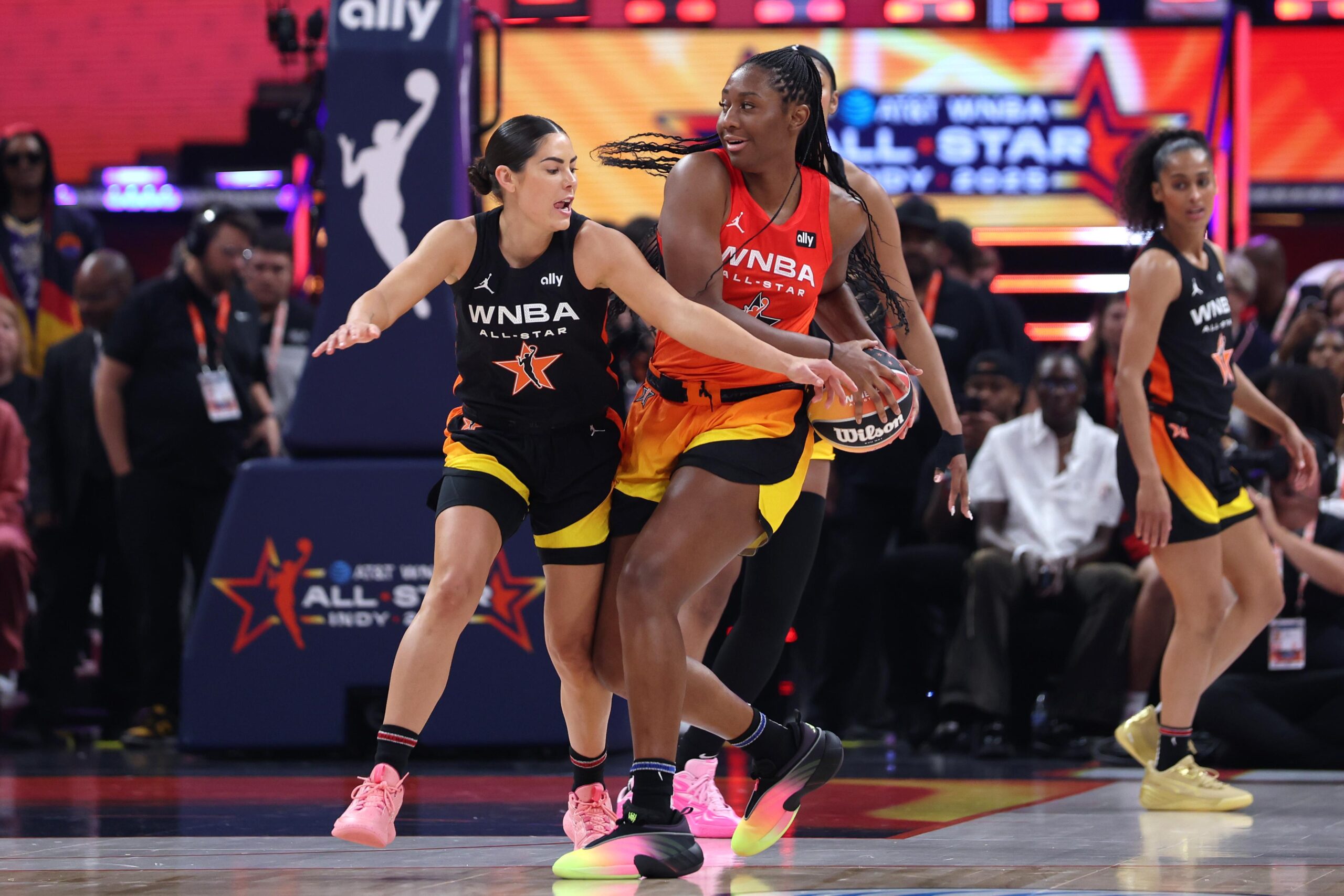
Aliyah Boston has built her young WNBA career alongside some of the game’s brightest stars, and the Indiana Fever center says those experiences have shaped her in distinct ways. Recently, Boston opened up about how working with Kelsey Plum challenges her differently than playing with her current Fever teammate Caitlin Clark—highlighting the contrast in leadership styles, energy, and on-court demands between two elite guards.
Boston, the former No. 1 overall pick, has quickly become a cornerstone for Indiana, anchoring the paint while adapting to a fast-evolving offense built around Clark’s shooting and playmaking. But she’s also shared the floor with Plum in other competitive environments, and the difference, Boston explained, goes far beyond positions or statistics.
With Clark, Boston feels pushed through pace and precision. Clark’s range stretches defenses the moment she crosses half court, which forces Boston to be constantly engaged—setting sharper screens, reading defensive rotations earlier, and staying ready for quick decision-making opportunities around the rim. Clark’s style creates space, but it also demands perfect timing. For Boston, that means being mentally locked in on every possession, knowing that a split-second delay can be the difference between a clean look and a missed opportunity.
Plum, on the other hand, pushes Boston in a more direct and vocal way. Known for her intensity and edge, Plum brings a confrontational competitiveness that Boston says raises the emotional temperature of the game. With Plum, the push is often verbal and immediate—calling out positioning, demanding physicality, and challenging teammates to match her energy. That kind of pressure, Boston noted, sharpens her toughness and accountability, especially in high-stakes moments when composure matters most.
The contrast has helped Boston grow into a more complete leader herself. From Clark, she’s learning how to operate within a system driven by spacing, trust, and creativity. From Plum, she’s absorbing the value of urgency and fearless communication. Boston has embraced both, recognizing that elite teams need multiple types of leadership to succeed.
As the Fever continue to develop chemistry around their young core, Boston’s ability to adapt has been crucial. Her comfort playing with a generational shooter like Clark has already begun to pay dividends, opening lanes for post touches and improving her passing out of double teams. At the same time, the lessons learned from Plum’s demanding style have carried over—showing up in Boston’s increased assertiveness on defense and willingness to call out coverages.
For Boston, the takeaway is simple: greatness doesn’t come from being pushed in just one way. It comes from learning to respond to different challenges, different personalities, and different expectations. Whether it’s Clark’s quiet confidence and court vision or Plum’s fiery intensity, each has left a mark on Boston’s game.
And as her career continues to rise, those varied influences may be exactly what helps Aliyah Boston make the leap from star to franchise-defining force in the WNBA.