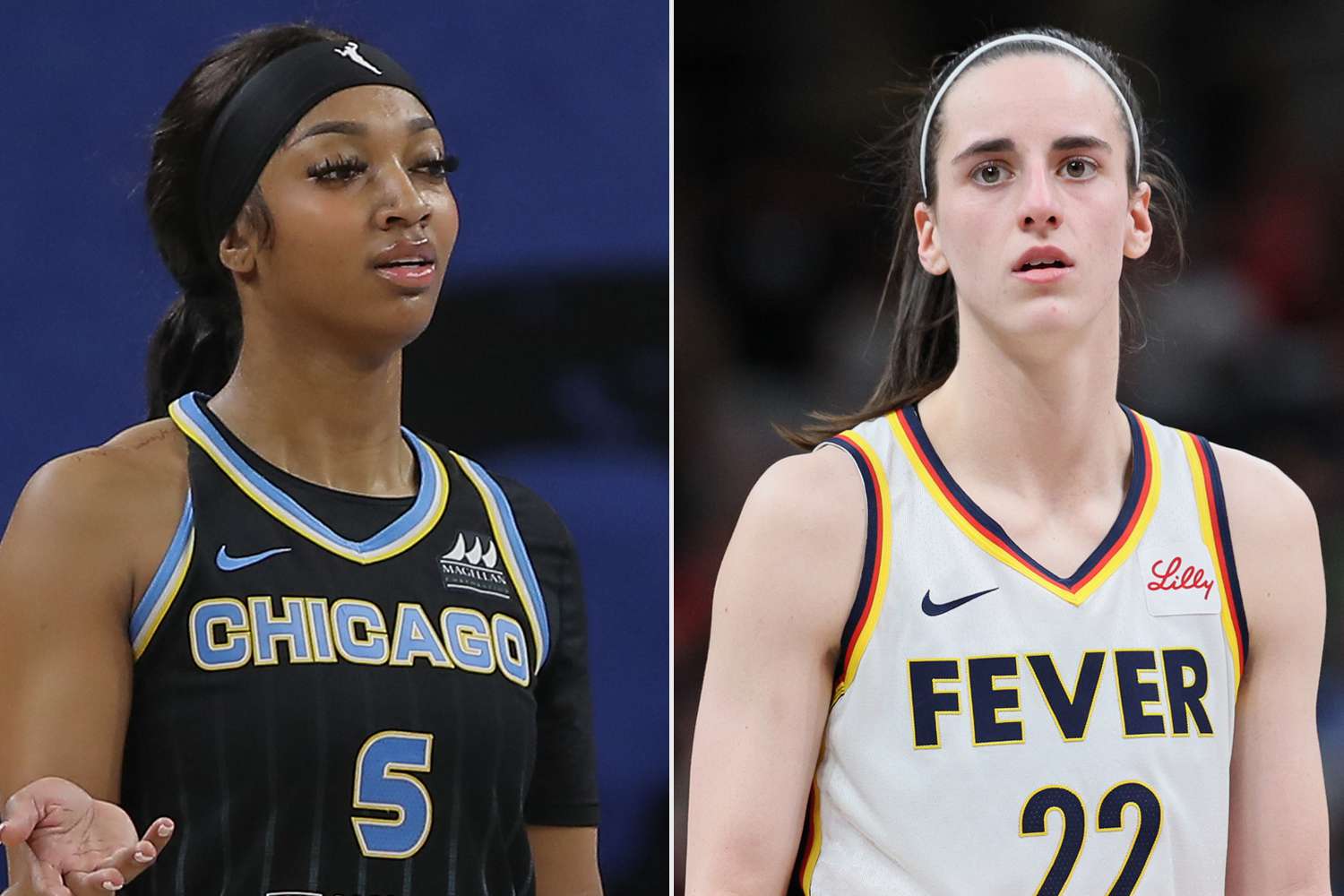
A former WNBA star has pushed back strongly against the growing trend of comparing Caitlin Clark and Angel Reese, calling the matchup “apples and oranges” and criticizing sports media for forcing a rivalry that ignores what makes each player unique.
As Clark and Reese continue to dominate headlines early in their professional careers, coverage has often framed them as opposing figures—two stars destined to be measured against one another at every turn. But according to the former WNBA standout, that framing does a disservice not only to the players but to the sport itself.
“These are two completely different players with different games, different roles, and different impacts on the floor,” the former star said in recent commentary. “Trying to boil them down into a head-to-head comparison oversimplifies basketball and feeds into a narrative that doesn’t really exist.”
Caitlin Clark has become synonymous with deep-range shooting, offensive creativity, and high-volume scoring. Her game is built around spacing, vision, and the ability to stretch defenses well beyond the three-point line. Angel Reese, on the other hand, has carved out her reputation through physicality, rebounding dominance, defensive intensity, and relentless effort in the paint.
According to the former WNBA player, those contrasts are exactly why constant comparisons miss the point.
“One player changes the geometry of the court the moment she crosses half-court. The other controls the glass, sets the tone defensively, and wins possessions through effort and toughness,” she said. “Both are elite. They’re just elite in different ways.”
The criticism also touched on how media-driven rivalries can shape public perception, particularly for young players transitioning into the professional game. The former star warned that pitting Clark and Reese against each other risks reducing their accomplishments to talking points rather than appreciating their individual growth and contributions.
“There’s room in this league for multiple stars, multiple styles, and multiple paths to greatness,” she added. “We don’t need to constantly rank or compare to validate anyone.”
Fans have embraced both players for different reasons, and their contrasting styles have helped draw new audiences to women’s basketball. While comparisons may generate clicks and debate, the former WNBA star urged media outlets to shift the focus toward storytelling that highlights skill, development, and respect for the game.
In her view, celebrating Clark and Reese on their own terms—not as opposing sides of a manufactured rivalry—would better serve the league and the next generation of players watching closely.
“Let them be who they are,” she said. “That’s how the game really grows.”