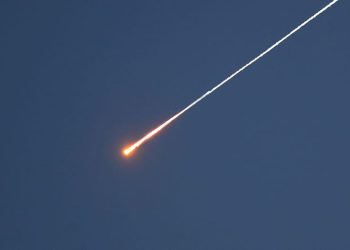
In a troubling development that has heightened tensions across the region, Iran has reportedly introduced one of its most sophisticated weapons systems to date—the Terminal-Phase MARV (Maneuverable Reentry Vehicle) missile. This advanced missile, capable of hypersonic speeds and sharp directional changes during its final descent, represents a significant evolution in modern warfare technology.
According to early reports, the missile was launched amid ongoing hostilities and managed to breach layers of air defense, including systems operated by both Israeli and U.S. forces. The MARV’s defining feature lies in its ability to alter its trajectory in the terminal phase, making interception far more difficult compared to traditional ballistic missiles.
Defense systems were quickly activated in response to the incoming threat, with multiple interception attempts made. However, the missile’s velocity and erratic flight pattern appear to have overwhelmed these defenses, allowing at least one warhead to pass through and reach its intended zone near a sensitive military site.
Explosions were reported shortly after impact, with initial assessments pointing to structural damage in the surrounding area. While the full extent of the damage is still being evaluated, the incident marks a notable shift in the effectiveness and complexity of recent military engagements involving Iran.
This latest strike underscores the growing sophistication of missile technology in the region and raises new concerns about the evolving balance of power. Analysts suggest that such developments could influence future defense strategies and further complicate an already volatile geopolitical landscape.