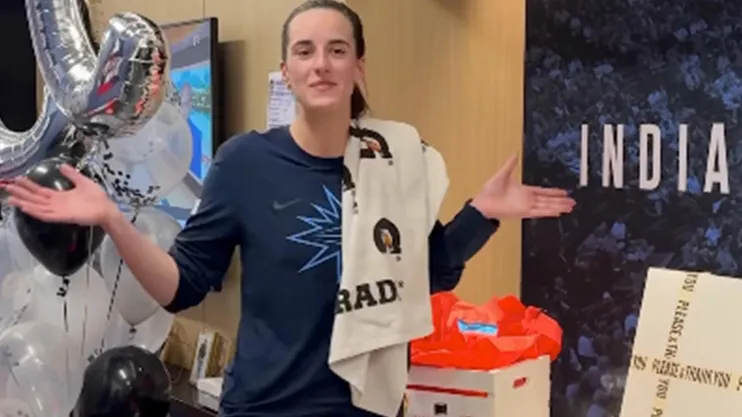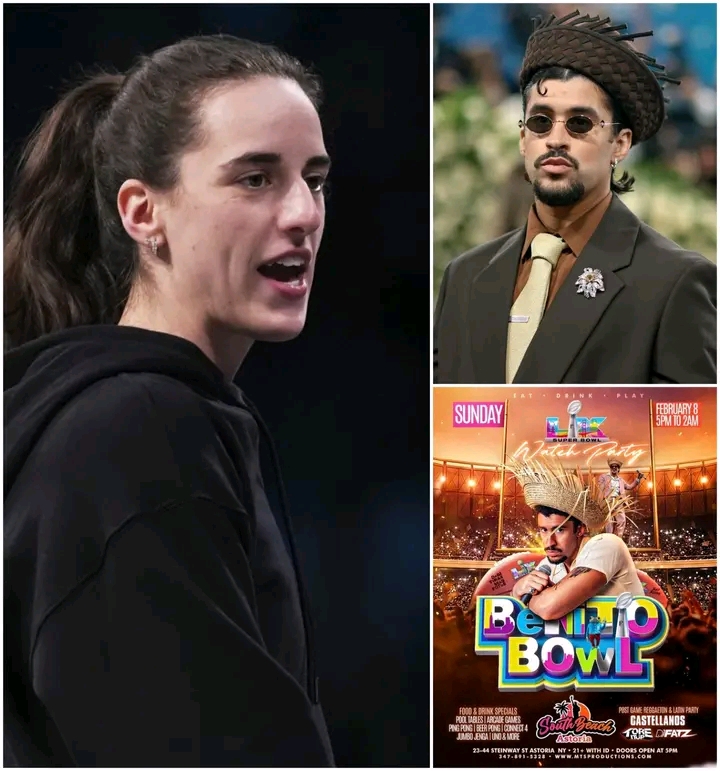
The viral claim circulating online that WNBA star Caitlin Clark delivered an angry 21-word outburst criticizing Bad Bunny’s selection as the headliner for the Super Bowl LX halftime show, calling him a “non-American, L.G.B.T artist” and accusing him of being racist while asking “Where is America’s singer?” appears to be unfounded and part of a pattern of fabricated celebrity reactions.
Bad Bunny, the Puerto Rican reggaeton and Latin trap superstar, was officially announced in September 2025 as the solo headliner for the Apple Music Super Bowl LX halftime show, set for February 8, 2026, at Levi’s Stadium in Santa Clara, California. This marks him as the first Latino and Spanish-language artist to headline the event solo, following his guest appearance during the 2020 Shakira/Jennifer Lopez performance. The choice sparked significant online debate, with some conservative critics (including figures like President Donald Trump and others) questioning the pick, arguing it lacked broad “American” appeal or pushed certain agendas. Supporters highlight it as a milestone for global Latin music representation.
However, no credible news sources, interviews, social media posts from Clark, or reports link her to any such statement about Bad Bunny. Searches for the specific phrase “Where is America’s singer?” or the described 21-word reaction in connection with Clark yield no legitimate results—only recycled or mismatched viral posts that swap in other celebrities (e.g., Stevie Nicks or Jason Kelce) in similar fake outrage templates.
The linked article on nexivon.biz (and similar low-credibility sites pushing near-identical stories) fits a common pattern of clickbait or AI-generated misinformation designed to exploit cultural and political divisions around the halftime show controversy. These often fabricate quotes from high-profile athletes or celebrities like Clark—who has been vocal on basketball topics but not on this music issue to drive traffic.
In reality, Clark has commented on Super Bowl matters unrelated to the performer, such as expressing dislike for certain teams (e.g., the Buffalo Bills) and picking favorites in games, but nothing ties her to Bad Bunny criticism. The story seems engineered for engagement amid the real backlash to Bad Bunny’s booking, which has included petitions, political commentary, and even counter-programming ideas from groups like Turning Point USA.
This highlights how misinformation spreads quickly on social platforms, especially when it taps into hot-button issues like nationalism, identity, and entertainment choices. Always cross-check viral celebrity “reactions” against reliable outlets before accepting them as fact.
About the Author