As the WNBA steps into another era of expansion, rising viewership, and unprecedented cultural influence, a troubling pattern continues to overshadow the league’s progress: Black women, who make up the majority of its players, are almost entirely absent from its head coaching ranks.
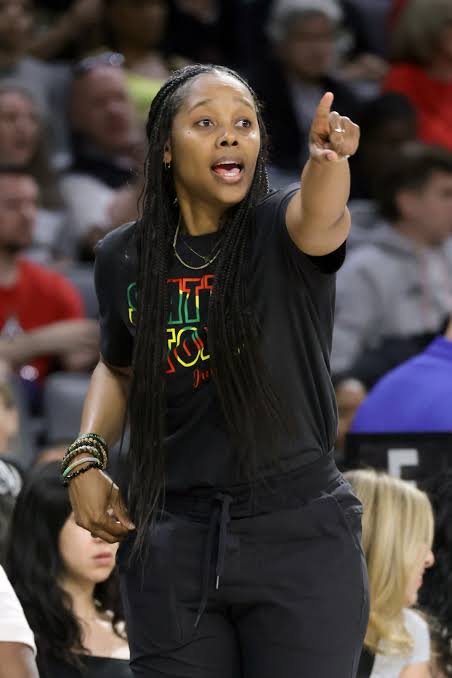
Back in 2021, Noelle Quinn became the first Black woman to lead the Seattle Storm. During her introductory press conference, she honored every Black woman who had ever led a WNBA team. The tribute took only 17 seconds — a painful reminder of how few opportunities had existed in the league’s first 24 years.
Fast-forward to 2025, and the situation has grown even more bleak. Quinn’s firing in September not only ended her time in Seattle but also brought the number of Black female head coaches in the WNBA down to zero. Despite five coaching vacancies this offseason — and numerous qualified Black women ready to lead — not a single one landed a head coaching job. This marks two straight hiring cycles and twelve openings where Black women weren’t chosen.
For a league powered by Black women on the court, the message is impossible to ignore: You can play here. You just can’t lead here.
“Innovation” — But Only for Some
Across recent hiring cycles, general managers have emphasized wanting “innovative” and “forward-thinking” coaches to match the league’s evolving style of play. But who gets to be labeled innovative? Historically, Black women have rarely received that recognition — even when their results speak for themselves.
The same bias shows up at the college level. In 2023, The Athletic surveyed 30 collegiate coaches about the best X’s-and-O’s minds in the country. Dawn Staley — undefeated at the time and leading one of the most dominant programs in modern basketball — received just one vote. Coaches admitted they equated strategy with offense, indirectly dismissing Staley’s defensive brilliance. As Staley put it after winning the 2024 national title, “If we’re not an X-and-O staff, how are we beating the X-and-O coaches?”
NBA Assistants Now Filling WNBA Jobs
As the WNBA’s popularity increases, coaching jobs have become more attractive to candidates from the NBA — particularly male assistants. This year’s Liberty search reportedly came down to four names: three NBA assistants, and Kristi Toliver, one of the most decorated and qualified WNBA-experienced candidates available.
The Liberty hired Warriors assistant Chris DeMarco.
Similarly, Portland hired former Cavaliers assistant Alex Sarama, and Phoenix continues under Nate Tibbetts — who became the highest-paid coach in WNBA history before coaching a single WNBA game.
These hires aren’t necessarily unqualified — but the pattern is unmistakable. NBA men are now stepping into opportunities that WNBA women, especially Black women, have been working toward for years.
Overlooked Talent Is Everywhere
Take Rena Wakama. She has coached in college, serves as an assistant for the Chicago Sky, and leads Nigeria’s national team. Under her leadership, Nigeria won back-to-back AfroBasket titles and reached the quarterfinals of the 2024 Olympics — the first African team ever to do so. Yet she wasn’t even mentioned as a candidate for a WNBA job.
Or Briann January, a respected assistant who has coached at multiple levels and is widely praised across the league. Or Kristi Toliver, whose résumé is stronger than many who were hired.
These women aren’t missing qualifications — they’re missing opportunities.
The Weight Black Female Coaches Carry
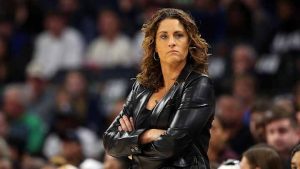
Black women who do reach head coaching roles often feel pressured to represent their entire demographic. When one fails, the fear is that owners, executives, and media will treat it as evidence that Black women as a whole are “not ready.” No other group carries this burden.
Betting setbacks by Quinn or Tanisha Wright shouldn’t disqualify the next Black woman from consideration. Yet too often, it feels like that is exactly what happens.
Representation Is Improving — But Not for Black Women
There is diversity on the sidelines: Natalie Nakase and Sonia Raman, both women of color, now lead franchises. Two Black men — Tyler Marsh and Sydney Johnson — also hold head coaching roles. All are qualified, but their presence does not erase the absence of Black women.
A pipeline for former WNBA players exists, but it will take time to mature — and even then, it remains unclear whether that pipeline alone is enough to lead to head coaching jobs.
A League Growing Without the Women Who Built It
As the WNBA expands, breaks records, and pushes into new cities, Black women — who have carried the league on the court for nearly three decades — are being pushed to the sidelines when it comes to leadership. Whether the league chooses to address this inequity in future hiring cycles remains unknown.
But one thing is clear: the WNBA cannot claim true growth if Black women continue to be shut out of the very jobs they’ve earned.