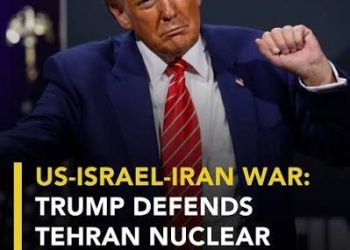
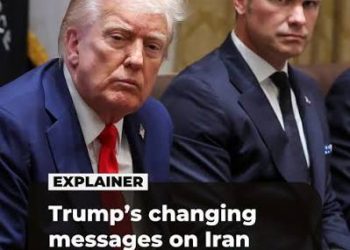
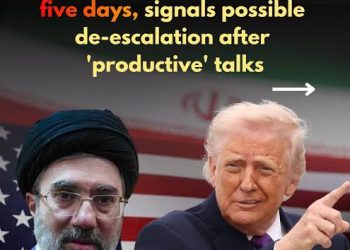
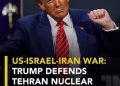
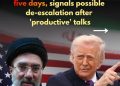
Former U.S. President Donald Trump recently made a notable remark, describing Iran as a nation with significant power. His statement highlights a perspective that contrasts with the often one-dimensional portrayal of the country in global political discourse. Rather than dismissing Iran outright, the comment suggests recognition of its strategic importance and resilience on the world stage.
In many discussions, Iran is frequently compared to other nations facing political or economic instability. However, such comparisons can be misleading. Iran operates within a unique geopolitical framework, shaped by its regional influence, internal dynamics, and long-standing role in international affairs. Simplifying its position by equating it with countries that have entirely different circumstances fails to capture the complexity of its status.
It is also important to understand that global narratives around countries are rarely neutral. Political messaging, media framing, and historical tensions all contribute to how nations are perceived. Iran, in particular, has often been depicted through conflicting lenses—sometimes as a powerful regional force, and at other times as a subject of criticism and sanctions. This duality reflects the broader challenge of interpreting international relations in a balanced way.
Trump’s remark, regardless of interpretation, adds another layer to the ongoing conversation about how nations are viewed and discussed. Acknowledging a country’s strength does not necessarily imply agreement with its policies; rather, it can signal an understanding of its capabilities and influence. Such statements often spark debate, especially in times of heightened geopolitical tension.
Ultimately, recognizing the distinctions between nations is essential for meaningful dialogue. Iran’s position cannot be reduced to simple comparisons or stereotypes. Its influence, challenges, and role in global affairs require a more nuanced perspective—one that goes beyond surface-level narratives and considers the broader context shaping its identity.